Mentoring, peer support and family support in recovery
Peer support means help from someone who has been through addiction or mental illness and recovered. In Virginia it comes from registered peer recovery specialists, recovery community organisations, free mutual-help groups and family programs, and it works alongside treatment rather than replacing it.
Updated
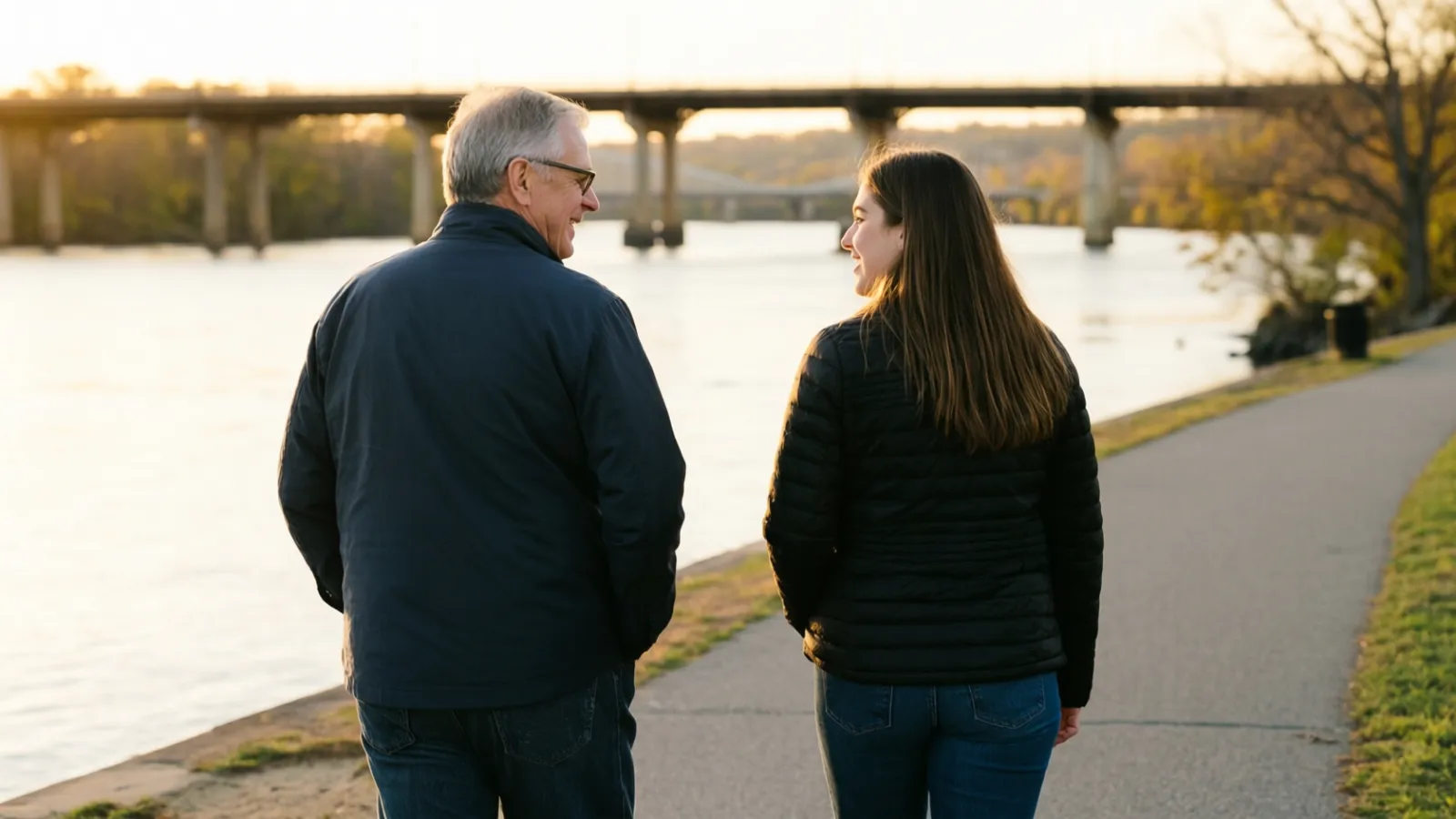
Treatment helps a person stop or cut back. What keeps recovery going between appointments is usually other people: someone who checks in, a group that meets on Tuesday nights, a family that knows how to respond. This page explains the main kinds of non-clinical support in Virginia, who each one is for, and how to find it.
None of these replace a clinical assessment or treatment. They sit beside it. If you are still working out what level of care you or a family member needs, start with what an assessment is.
Youth mentoring for young people at risk
Youth mentoring pairs a young person with a trained adult who meets with them regularly, often weekly, over months. The mentor is not a therapist. The relationship is the point: a steady adult who shows up, helps with school or job goals, and gives the young person someone to talk to before small problems get bigger.
Programs aimed at at-risk youth may focus on young people who have a parent with a substance use disorder, are involved with juvenile justice or foster care, or are already using alcohol or drugs. Some are run by schools, some by nonprofits, and some by a local Community Services Board (CSB) as part of prevention work.
Questions worth asking a youth mentoring program:
- How are mentors screened and trained, and is there a background check?
- How often do mentor and young person meet, and where?
- Who supervises the mentors, and who do they call if they are worried about the young person’s safety?
- Does the program work with the young person’s counselor or school, with permission?
Peer recovery specialists
A peer recovery specialist is someone in recovery from a substance use disorder or mental illness who has been trained to support others. They do not diagnose or provide therapy. They share what worked for them, help people set recovery goals, go with them to appointments, connect them to housing or work resources, and stay in touch during hard weeks.
In Virginia, peer recovery specialists can register with the Board of Counseling at the Department of Health Professions (the credential is “Registered Peer Recovery Specialist”). Registration requires training and supervised experience. The details change from time to time, so check the Board of Counseling’s site for the current requirements. Registration matters partly because Virginia Medicaid can pay for peer recovery support services when they are provided by a registered specialist under a qualifying program.
You may meet a peer specialist in:
- a CSB’s substance use or mental health program
- a hospital emergency department, after an overdose
- an outpatient or medication for opioid use disorder program
- a recovery community organisation
- a drug court or jail re-entry program
Recovery coaching
“Recovery coach” overlaps with “peer recovery specialist” and the terms are often used for the same role. A recovery coach usually has lived experience and works one to one on practical goals: building a daily routine, getting back to work, repairing relationships, planning for situations that make relapse more likely.
Some recovery coaches work in programs and are covered by insurance or Medicaid. Others work privately and charge a fee. Coaching has no single national standard. Ask about training, supervision and whether the coach is a Registered Peer Recovery Specialist in Virginia.
Recovery community organisations
A recovery community organisation (RCO) is an independent nonprofit run by and for people in recovery. RCOs often run a recovery centre with drop-in hours, all-recovery meetings, peer support, social events without alcohol, and help with practical needs like ID documents or job applications.
They welcome people on any recovery path, including people taking medication for opioid use disorder. Virginia has RCOs in many regions. The Virginia Department of Behavioral Health and Developmental Services (DBHDS) Office of Recovery Services supports peer and recovery work across the state and is a good starting point for finding one near you.
Mutual-help groups
Mutual-help groups are free, peer-led meetings. Nobody is paid to run them, and you do not need a referral.
| Group | Approach | Format |
|---|---|---|
| Alcoholics Anonymous (AA) | Twelve steps, sponsors, spiritual but not tied to one religion | In person and online, very widely available |
| Narcotics Anonymous (NA) | Twelve steps, focused on any drug | In person and online |
| SMART Recovery | Self-management tools drawn from cognitive behavioural approaches; no steps or sponsors | In person and online |
Each group has its own culture, and individual meetings vary a lot. Many people try several meetings before finding one that feels right. If you take medication for opioid use disorder, you may hear mixed views about it at some meetings. Your treatment decisions belong to you and your prescriber, not to a group.
Support for families
Families often carry a great deal of worry with very little guidance. Two kinds of help are widely available.
Al-Anon and Nar-Anon are free mutual-help groups for people affected by someone else’s drinking or drug use. They focus on the family member’s own wellbeing, not on changing the person who is using.
CRAFT (Community Reinforcement and Family Training) is a structured approach taught by trained clinicians, in person, in groups or through books and workbooks. It teaches family members to communicate in ways that make treatment more likely, reward periods of not using, let natural consequences happen, and look after their own safety. CRAFT has research support for helping families get a loved one to enter treatment. It suits families who want an active role.
A CSB or outpatient program can also tell you about family education groups. If you are worried about a family member’s immediate safety, see get help now.
How to find peer support in Virginia
- Call your local CSB. Every Virginia city and county is served by one of the state’s Community Services Boards. Ask whether they offer peer recovery support and family programs. See Community Services Boards for how to find yours.
- Ask your current provider. Many outpatient and medication programs have peer specialists on staff or know local ones.
- Look for a recovery community organisation through DBHDS’s Office of Recovery Services.
- Find a meeting on the AA, NA, SMART Recovery, Al-Anon or Nar-Anon websites, which list in-person and online meetings.
- Call the SAMHSA National Helpline at 1-800-662-4357 (free, confidential, 24/7) for referrals to local services.
If you have Medicaid, ask your health plan’s care coordinator whether peer recovery support is covered for you and which local programs provide it. More on coverage is on paying for treatment.
Sources
Read next
- Virginia's Community Services Boards What Virginia's 40 Community Services Boards do, from 24/7 emergency services to same-day assessments and MOUD, what they cost and how to find yours.
- Outpatient and intensive outpatient treatment How outpatient and intensive outpatient (IOP) treatment work, what sessions involve, medication for OUD, telehealth and how to find a program in Virginia.
- Treatment levels and support services, explained How outpatient, intensive outpatient, day treatment, residential and inpatient care differ in Virginia, plus support services and how people move between them.